#15 is also a reread. I continued the end of 2012's endeavor by continuing the Harry Potter series with Harry Potter and the Prisoner of Azkaban by, none other, than J.K. Rowling.
I am not going to review each of these as I read them, but can I just say: I have such a new found appreciation for Azkaban. It was never one of my favorites in the series, but it is so important to all the subsequent books in the series and gets really compelling toward the end, even reading it for the sixth time!
(I will also note here that, according to my Goodreads profile, I am not only on track for my goal, but I am A BOOK AHEAD! YAYAYAYAYA!!!)
I have been reading the series while also reading new books, however, so stay tuned.
Saturday, June 29, 2013

TFiOS Magic
Book #14 is a reread from last year.
I can't give The Fault in Our Stars by John Green enough praise, but for the sake of avoiding redundancy, I will redirect you to my original review here.
I reread it for a Speech piece for two of my students and I am SUPER excited to see what comes out of it!
I can't give The Fault in Our Stars by John Green enough praise, but for the sake of avoiding redundancy, I will redirect you to my original review here.
I reread it for a Speech piece for two of my students and I am SUPER excited to see what comes out of it!
Books in Birmingham
Last week I joined our national qualified students and a fellow coach to the Speech and Debate national tournament (through the National Forensic League) in Birmingham! It was a blast, and I am proud to have had students competing in such a prestigious academic contest.
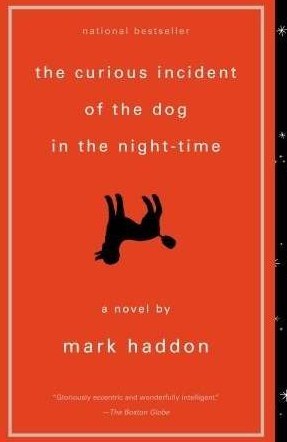
During the small amount of down time I had alone in my own hotel room and between competition rounds that I judged, I was able to work on my thirteenth book of 2013:
 This one was recommended to me by a friend and, after having read the description, it was one I knew I'd enjoy. I had no idea it was used in the high school curricula of so many schools. In fact, many other judges at the tournament commented on the book I was reading with high praise (they also complimented the my Catcher in the Rye "Holden Caulfield thinks you're a phony" shirt, which you can buy here).
I understand their praise! It so accurately highlighted the struggles and characteristics of an individual with autism (though, now that I think of it, it was never actually stated that the protagonist has autism... interesting), while also providing a compelling story.
Anyway, four stars!
During the small amount of down time I had alone in my own hotel room and between competition rounds that I judged, I was able to work on my thirteenth book of 2013:
I understand their praise! It so accurately highlighted the struggles and characteristics of an individual with autism (though, now that I think of it, it was never actually stated that the protagonist has autism... interesting), while also providing a compelling story.
Anyway, four stars!
Pride and Prejudice... and Progress
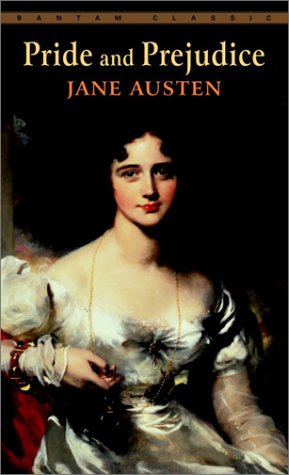
It seems as though I am a bit behind in reviewing my 2013 literary experience. I'll start with what was my twelfth book this year:
 I have really enjoyed reading many "classics" that I would have read sooner had I been an English major (lucky English majors!) and Pride and Prejudice was a continuation of that endeavor. I bought the book a few years ago, but in typical me fashion, it was among a pile of purchased books left to plow through that eventually got forgotten after I bought a new stack to read.
This one (and Jane Austen novels in general) has been highly recommended by a friend for quite a while. Honestly, this type of genre is not typically my favorite, but as was the case with Gone With the Wind I knew I'd enjoy it once I finally finished it.
It always boggles my mind what people lived for during this time period. Like, it's crazy how a successful marriage meant one that included wealth and status (even if it meant marrying your first cousin). Older novels tend to remind me of the differences in societal norms between my world in the here and now and that of the worlds of other times and places. This one was no exception! Yay, classics!
This one (and Jane Austen novels in general) has been highly recommended by a friend for quite a while. Honestly, this type of genre is not typically my favorite, but as was the case with Gone With the Wind I knew I'd enjoy it once I finally finished it.
It always boggles my mind what people lived for during this time period. Like, it's crazy how a successful marriage meant one that included wealth and status (even if it meant marrying your first cousin). Older novels tend to remind me of the differences in societal norms between my world in the here and now and that of the worlds of other times and places. This one was no exception! Yay, classics!
Sunday, June 9, 2013
#11
11 books and still going strong! I'm really hoping I'll be able to make 30 this year.

For book #11, I read the last John Green novel I hadn't read yet, which I borrowed from a friend.

Katherines, like all John Green books, was a pretty quick read. I read it in one sitting. I wasn't super impressed. Like, it was a John Green book, so it was good and I liked it. But it's definitely the least enjoyable of all his books. It was cute and it was funny, but it didn't yield the emotional connection that Looking for Alaska or The Fault in Our Stars or even Paper Towns did.
So now that I've read all of his books, I can rank them from best to least good (I don't like to say "worst" in this case because that seems to imply that John Green has bad novels).
1) The Fault in Our Stars. By far!
2) Looking for Alaska
3) Paper Towns
4) An Abundance of Katherines
5) If you can count this one because it was only half written by John: Will Grayson, Will Grayson
Saturday, June 1, 2013
Quiet: The Power of Introverts in a World That Can't Stop Talking

There's a lot of technical and research-based discussion, of course (which is very thorough), but as a whole it reminded me of how much pressure was thrust upon me as a child to "be more outgoing," "participate more in class," and "speak up." I can't help but wonder how different my early education and entire childhood could have been if teachers and other adults had learned to value quiet leadership, thoughtfulness, and independent work. Susan Cain actually answers much of this and I won't spoil all the details for you. But I will give you a hint: The Extrovert Ideal. Another hint: it's not a thing in Asia....
Cain doesn't advocate for everyone to become introverts. That's not good for society and also not possible (also explained at length in Quiet). What she advocates for is balance, and I agree that a balance of the two within a person and within a society can do great things.
I highly recommend this book to anyone really. Extroverts will understand their friends, families, and coworkers much better (after all, 1/3 to 1/2 of all people are introverts), and introverts will learn to embrace their tendencies and use them for good.
Here's a comprehensive and fantastic TED talk with Susan Cain:
I'll leave you with an awesome "Manifesto for Introverts" that is in the front cover:
1) There's a word for "people who are in their heads too much": thinkers.
2) Solitude is a catalyst for innovation.
3) The next generation of quiet kids can and must be raised to know their own strengths.
4) Sometimes it helps to be a pretend extrovert. There will always be time to be quiet later.
5) But in the long run, staying true to your temperament is key to finding work you love and work that matters.
6) One genuine new relationship is worth a fistful of business cards.
7) It's OK to cross the street to avoid making small talk.
8) "Quiet leadership" is not an oxymoron.
9) Love is essential; gregariousness is optional.
10) "In a gentle way, you can shake the world."- Mahatma Gandhi
Monday, May 27, 2013
On a roll...
According to Goodreads.com I am still three books behind schedule in accomplishing my goal of reading 30 books in the year 2013. I am hopeful, however, because I have really been plugging along since I graduated. I am loving it! A bookworm's paradise... :)
 Look Me in the Eye by John Elder Robison was another one of the books I got on my book shopping spree shortly before the semester ended. As I completed the classes necessary to receive my minor in Child Psychology, I developed an increasing interest in Autism Spectrum Disorders and Asperger's in particular. I'm not sure why exactly, but I as I read this book I discovered that I can relate to individuals with such a diagnosis on some small level. That is not to say that I believe I have an un-diagnosed variation in any way, but I think be open to relating to others is important in understanding people complexly.
On Goodreads, I gave this one three stars. There are a lot of things I liked about it, but let's get the few negatives, and the reason why it didn't receive a higher rating from me, over with. There's a large chunk of the book in which Robison explains in great detail the things he was interested in as a child and as he grew older. While I find it interesting that his greatest interests manifested themselves in his book in this way, and will venture to say that this is a manifestation of certain characteristics of individuals with Asperger's, these are not my interests, and therefore were dry parts of the book for me. However, I enjoyed all overarching themes of the book and, while I reserve four- and five-star ratings for books that BLOW MY MIND, this particular read was definitely more than "OK" to me.
Robison is an interesting case of Asperger's, in that, due to the relatively recent incorporation in the DSM, he wasn't diagnosed until he was in his forties! This made me think a lot about labels and how they affect people. Robison briefly discusses the plasticity of the brain and mentions that the way children overcome Asperger's is likely strongly related to the types and quality of experiences they have in their lives, and how these experiences encourage a child to develop socially and intellectually. (Interesting side note: Robison experiences this phenomenon as a sort of waxing and waning of social development; whenever he felt more socially aware, he felt less in tune with his intense interests, and vice versa.) Because the author had no diagnosis growing up, I can't help but wonder how a label of Asperger's would have changed his experiences and social development. He seems to fully believe that the label would have made his experiences ten times better, but I'm not so sure. And what I mean by that is, I don't know.
The diagnosis of Asperger's would have given Robison and everyone he knew an explanation for his behavior and characteristics. He argues that he wouldn't have felt like he was just "weird" and that the many counselors and psychologists he saw wouldn't have labeled him as a "sociopath." This is probably all true. However, it's worth noting that perhaps the WORST side effect of labels is that they change the expectations of the individual. Considering what the general public knows about Autism Spectrum Disorders and Asperger's, it's probably fair to say that the average person would not expect an individual with Asperger's to thrive in a position that requires management and frequent interaction with people. On the other hand, if we consider an average person without an Asperger's diagnosis, the general public would likely expect that person to not only interact with other people on a regular basis, but to do it well and effectively. Before Robison received his diagnosis, he found a profession in which he honored his greatest interests, and also required a great deal of positive socialization, and he thrived on both counts.
I'm not going to claim that labels are either inherently GOOD or inherently BAD, except to say that I acknowledge their necessity. But I think it's an issue that's worth considering, especially when the upcoming version of the DSM will eliminate Asperger's as a diagnosis. The plan is that any child that would be diagnosed with Asperger's will soon be lumped into general Autism Spectrum Disorders. I haven't decided how I feel about this change, but I know that there is one important identifier that distinguishes the two. Both diagnoses indicate a degree of social impairment, but while individuals with autism want to spend their time alone, individuals with Asperger's desperately want to connect with other people. As for me, I feel this distinction is significant. This issues brings us back to the idea of labels. The general publish already has an idea of what they know to be Autism and what they know to be Asperger's and, for many people, the two are very different in many ways. I wonder how the elimination of Asperger's will affect how a child is perceived.... Only time will tell. I would be interested in knowing how Robison feels about this issue.
As demonstrated by my lengthy rant, I certainly found Look Me in the Eye to be very thought-provoking. And with that, I'll leave with my favorite line from it:
"I don't know if it's an Aspergian trait or if it's just me, but I was never affected by celebrity. No matter how famous a musician was, he was just a guy with a broken guitar or an idea for a sound effect to me. But I could never explain that simple reality to other people."
Unlike Robison, I have always experienced the phenomenon of "celebrity," but I find that to be an unfortunate truth. The idea of romanticizing other people is dumb... but that's a whole other soapbox for a different day. :)
Subscribe to:
Posts (Atom)